

Understanding “how much does ceramic coating cost” is the first step to making a smart decision for your vehicle. Professional ceramic coating typically costs $600 to $3,500+, with most vehicle owners paying $1,000–$2,000 for a 3–5 year package. DIY kits cost $50–$300 but provide shorter durability and weaker protection.
In this guide from Hugo’s Auto Detail, you’ll learn real pricing ranges, what drives cost differences, how warranties impact value, and what a realistic quote looks like for your vehicle.
Key Takeaways
- Ceramic coating costs $600–$3,500+, with most drivers paying $1,000–$2,000 for a 3–5 year package
- Labor drives 60%–70% of the price, mainly due to paint correction and surface preparation
- Mid-range coatings offer the best value, averaging ~$375 per year based on lifespan and cost
- Professional coatings last 3–7+ years, while DIY options last only 6–18 months with weaker protection
- Ceramic coating provides long-term benefits like UV protection, hydrophobic performance, and easier maintenance, but requires proper care to maximize lifespan
- In coastal climates like Santa Barbara, where UV intensity and salt air accelerate paint oxidation, ceramic coating delivers above-average long-term value compared to inland regions.
Ceramic Coating Cost Breakdown (Quick Answer)
Ceramic coating pricing is determined by paint condition, labor hours, coating chemistry (SiO₂ or SiC), and durability rating, such as 9H hardness. Entry-level coatings start around $600–$800 for basic 1-year protection, while mid-range packages – typically the most common – fall between $1,000 and $2,000 and last 3 to 5 years. High-end, multi-layer systems with extended warranties can exceed $3,500. DIY kits remain the lowest-cost option at $50–$300 but lack professional-grade bonding and longevity.
A critical detail is that labor accounts for 60%–70% of total cost, largely due to surface preparation and paint correction.
What Do You Actually Get For The Price?
A ceramic coating delivers measurable performance improvements at a chemical level rather than just cosmetic shine.
- Hydrophobic behavior with water contact angles often exceeding 100°
- UV Protection Shield that reduces oxidation and paint fading – especially important in high-sun regions like Santa Barbara, where UV exposure is year-round
- Chemical resistance across a pH range of roughly 2–12
- Enhanced gloss through improved light reflectivity
- Easier maintenance – hydrophobic surfaces repel dirt, bird droppings, and road grime, reducing how often you need to wash your car
These properties mean the coating functions as a semi-permanent protective layer, stabilizing the paint surface against environmental damage while making maintenance significantly easier.
Cost Per Year Of Ceramic Coating (Real Value)
To understand true value, it helps to evaluate ceramic coating based on annual cost rather than upfront price.
|
Package Type |
Price |
Lifespan |
Cost Per Year |
|
Entry |
$700 |
1 year |
$700/year |
|
Mid-range |
$1,500 |
4 years |
~$375/year |
|
Premium |
$3,500 |
7+ years |
~$500/year |
Conclusion: Mid-range coatings typically provide the best cost-to-durability ratio, making them the most efficient option for long-term ownership. For most Santa Barbara drivers keeping their car 4+ years, the $1,500 mid-range tier is the practical sweet spot.
Ceramic Coating Warranty Explained
Ceramic coating warranties range from 1 year to lifetime coverage and are tied to both coating quality and maintenance. Entry-level packages ($600–$800) offer basic 1-year protection, while mid-range options ($1,000–$2,000) typically cover 3–5 years. Premium coatings ($3,500+) may include lifetime warranties, but only with strict upkeep.
Conclusion: Longer warranties increase cost because they depend on better materials and consistent maintenance. They also directly reflect the lifespan of ceramic coating, meaning durability is only guaranteed if proper care requirements are followed.
Professional Vs DIY Ceramic Coating
To clearly compare performance, cost, and long-term value, the key differences between professional and DIY ceramic coating are summarized below:
|
Aspect |
Professional Ceramic Coating |
DIY Ceramic Coating |
|
Average Cost |
$1,000–$2,000 (up to $3,500+) |
$50–$300 |
|
Durability |
3–7+ years |
6–18 months |
|
Bonding Strength |
Chemical bond (SiO₂ / SiC) |
Surface-level adhesion |
|
Paint Correction |
Included (1–3 stages) |
Not included |
|
Application Risk |
Low (trained professionals) |
High (streaks, high spots) |
|
Hydrophobic Performance |
High (strong water beading) |
Moderate |
|
Warranty |
1 year to lifetime (conditional) |
None |
Conclusion: Professional ceramic coating costs more upfront but delivers stronger bonding, longer durability, and lower risk, making it the more reliable long-term investment for most vehicle owners.
Ceramic Coating Cost By Vehicle Type
Vehicle size and complexity directly influence pricing due to differences in surface area, labor time, and correction needs. The comparison below shows how costs typically scale:
|
Vehicle Type |
Typical Price Range |
Labor & Material Impact |
Key Notes |
|
Compact / Sedan |
$600–$1,800 |
Lower surface area, less coating needed |
Entry-level pricing most common |
|
SUV / Truck |
$1,000–$3,000+ |
More surface area, increased labor hours |
Higher material usage and time |
|
Luxury / Exotic |
$3,500+ |
Multi-stage correction, premium coatings |
Requires meticulous finishing |
As vehicle size and complexity increase, both labor time and material usage rise, which directly drives higher ceramic coating costs.
What Factors Increase Ceramic Coating Cost?
Ceramic coating prices can rise significantly depending on the vehicle’s condition, size, and the type of coating package selected. The more time, labor, and material required, the higher the final quote.
- Paint Condition: Heavy swirl marks or oxidation can add $500–$1,500 due to extra correction stages
- Vehicle Size: Trucks and full-size SUVs can add $300–$800 from increased surface area and labor time
- Coating Type: Multi-layer or 9H coatings require more product and precision, increasing cost
- Brand Quality: Premium options like Ceramic Pro or Gtechniq come with higher material and warranty costs
- Geographic Location: Detailers in high-cost-of-living areas (like coastal California) may price 10–20% higher than national averages due to overhead and labor costs
The final price increases when the job requires more correction work, more material, or higher-grade coating systems.
Add-On Services That Increase Ceramic Coating Price
Optional services extend protection beyond paint and contribute to the total cost.
- Wheel coating typically costs around $250
- Interior ceramic coating averages about $750
- Glass coatings range from $80 to $250
- Paint Protection Film can add $1,500 to $5,000+
- Engine bay detailing adds $150–$300 (often recommended before coating if selling the vehicle)
These add-ons enhance the overall protection system but should be evaluated based on budget and usage needs. For most drivers, wheel coating + glass coating are the two add-ons with the highest day-to-day impact.
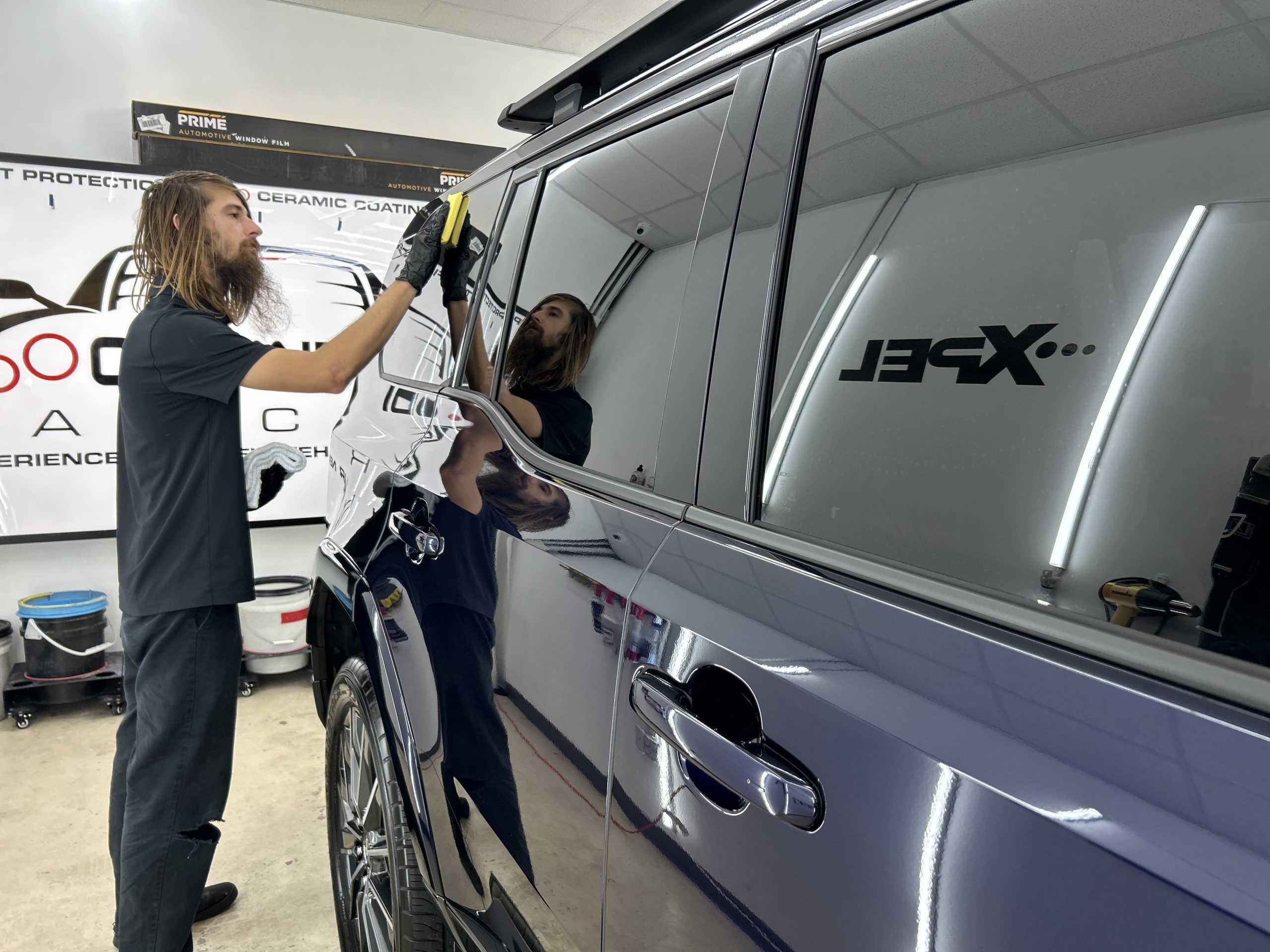
How Long Does Ceramic Coating Take?
The full ceramic coating process typically takes between 1 and 3 days. Initial preparation and washing may take a few hours, while paint correction can require anywhere from three to ten or more hours, depending on the defects. The coating itself is applied relatively quickly, but curing time, often between 12 and 48 hours, is essential for proper bonding and durability.
During the curing period, the vehicle should be kept dry and avoid exposure to bird droppings, tree sap, or water. Most professional shops will advise you not to wash the car for at least 7 days after application.
When Should You Get Ceramic Coating?
You should get ceramic coating as early as possible, ideally within 1–3 months of buying a new car or immediately after paint correction. Applying it early protects the paint while it’s still in optimal condition, reducing the need for heavy correction later.
It is also best applied after a full car detailing and paint correction process so the coating can lock in a defect-free finish. If applied to oxidized or damaged paint without correction, the coating will seal imperfections and reduce overall performance and longevity.
Is Ceramic Coating Worth the Cost?
Ceramic coating is worth the cost if you plan to keep your vehicle for 3+ years and want long-term protection with easier maintenance. It reduces cleaning effort, preserves paint condition, and helps maintain resale value by keeping gloss and clarity intact. However, its value depends on proper maintenance and realistic expectations; it enhances chemical and UV protection but does not make the vehicle scratch-proof.
For drivers in Santa Barbara and along the California coast, ceramic coating is particularly worthwhile: the combination of intense UV radiation, coastal humidity, and occasional salt air creates conditions that degrade unprotected paint faster than in most inland climates. A properly applied coating can delay oxidation and paint degradation by years.
Book Professional Ceramic Coating Service For Your Vehicle
Choosing the right detailer directly impacts the quality and longevity of your coating, so it’s important to evaluate providers carefully before booking a service.
- Look for certified installers (e.g., Ceramic Pro, Gtechniq) with proven experience
- Check before-and-after work and real customer reviews
- Ask about the paint correction process and warranty terms
- Request a clear, itemized quote covering prep, coating, and aftercare
Once you’ve verified these factors, you can confidently choose a provider that delivers consistent results. If you’re searching for a reliable ceramic coating service in Santa Barbara, Hugo’s Auto Detail is a trusted option known for professional application and convenient mobile detailing services. Contact us today!